 Materials which remember their shape and can be flexible then when you need to have long found their place in a variety of areas, ranging from underwear and finishing with refrigerators. One group of scholars considers the potential of materials with similar properties in biomedical instruments, where the material to full-scale unfolding in contact with a warm human body. Such a method ensures a smaller incision size and, therefore, reduces the risk of getting infections, especially in severe conditions.
Materials activating its shape when heated already shown its capabilities in the automotive parts and building materials, but subject to very high temperatures well. Therefore, reducing the interaction of temperature will lead to new discoveries in the fields much broader than the previous ones.
To carry out their pans, the University of Rochester team developed a polymer elastomer, it can stretch out, and when heated about 35 ° C to reclaim their form back. Achieving this change form is closely related to the manipulation of the crystal lattice.
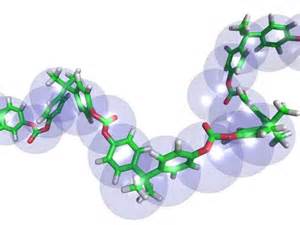
When the material is stretched across the lattice crystals appear small, they do not constrain the shape and give raspolztis material. When added to a polymer linkers can suspend the development of crystals. Thus, the finishing material may change the whole structure of the polymer, the polymer segments are reincarnated, and it was she who controls the interaction of temperature, roughly speaking, a material was added as the polymer chain and its crystals themselves and lead.
However, the team was looking for a material capable of operating at a temperature of the human body. Because, in the research tasks include finding or adaptation of the material capable to release useful energy, and steadfastly to go through the whole process. Thinking in this way, the team came to the optimization of the polymer network, in order to allow the material to become stronger and raise a thousand times its own weight.
“Almost all of the applications of shape-memory polymers, repelled on pushing or traction of the surrounding space” – says a leading research professor Mitch Anthamatten: “Nevertheless, researchers can measure the amount of rare mechanical work that these materials make for yourself.”
Anthamatten hopes that teplopolimer find a use in the creation and implementation of artificial leather, medical dispensers, and even self-clothes. When testing, for example, the researchers used a model of the truck, a lift and a toy pod with seeds.
Fainaidea.com