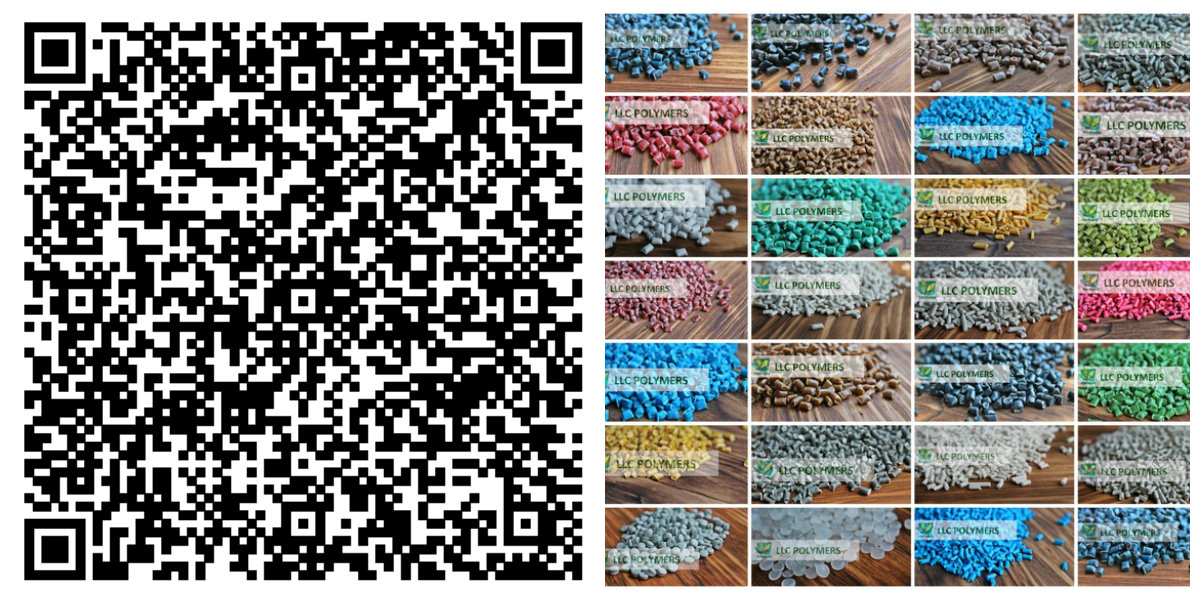
 Due to the presence of tertiary carbon atoms, polypropylene is sensitive to the action of oxygen, especially at elevated temperatures, which makes it more prone to aging than polyethylene and copolymers of ethylene with propylene. Therefore, during processing, stabilizers are added to the polypropylene.
Compared with polyethylene, polypropylene has higher strength, heat resistance, oxidation resistance and aggressive media. Produced in the form of white powder and granulated five grades PP-1 for processing by injection molding PP-2 and PP-4 for extrusion, 1PP-3 and PP-5 for pressing. Abroad, polypropylene is known mainly as moplen.
Thermoplastic materials suitable for injection molding and extrusion molding include polyethylene, polypropylene, polystyrene and its copolymers, plasticized polyvinyl chloride (plastic), polytrifluorochloroethylene (fluoroplast-3), polyformaldehyde, polyamides, polycarbonate, etrogols.
In the melting stage, stabilizers-oxidation inhibitors-are introduced into the polypropylene, and in some cases also into polyethylene, before the final processing. In terms of its chemical structure, polyethylene is close to paraffinic, and polypropylene to isoparaffin hydrocarbons. With prolonged contact with oxygen in the air, especially under the influence of sunlight, oxidation of polyolefins occurs. Naturally, the oxidation of polypropylene is easier than polyethylene, since the C-H bond on tertiary carbon atoms is more reactive than that of primary and secondary atoms.
Thermoplastic plastics can be welded. When heated, they become plastic and harden when cooled. This process can be repeated many times. After recycling, the physical and chemical properties of the product deteriorate somewhat due to overheating, contamination, degradation, etc. Therefore, thermoplastic masses (polyethylene, polypropylene, polystyrene, etc.) are usually manufactured as semi-finished products (films, sheets, rods, profiles, Pipes), which are then bent, stamped and welded.
For the production of tubular films the most widely. Low-density polyethylene obtained by high-pressure polymerization is used. The semicrystalline structure facilitates the process of its processing. Isotactic polypropylene and high-density polyethylene refer to high-crystalline polymers.
When studying the rheological dependencies of different polymers at processing temperatures, it was noted that for each processing method a separate region is allocated. For a certain group of polymers, these regions are relatively narrow. Based on the experimental data on this principle, a computational nomogram for determining the melt temperature of thermoplastics (polyethylene, polypropylene, polystyrene, polyformaldehyde and plasticized polyvinylchloride) was compiled in the manufacture of articles by extrusion and injection molding. For convenience of calculations, a viscosity scale and a melt flow rate scale are plotted on the nomogram. As can be seen from the nomogram, the production of pipes or tubular blanks for blowing is carried out at a higher viscosity than the films. Even lower viscosity must have a melt when cast under pressure. Naturally, it is possible to process polymers for other values of viscosity, but at the same time, the pressure in the units of aggregates increases, energy costs increase and the quality of the products changes. It should be noted that this nomogram can not be used for all polymers.
Die casting is used to produce piece products by curing melts in refrigerated molds. The process is in most cases fully mechanized and is one of the main processes in the processing of plastics. In this way, most of the thermoplastic parts are obtained (polyethylene, polypropylene, polystyrene, polyamide, etc.). Die casting is also widely used for curing non-ferrous metals and alloys
Polymers, in which, when heated, no transverse chemical bonds are formed and which soften at a certain temperature and pass from a solid to a plastic state, they are called hot-melt or thermoplastic. Such polymers do not change their structure during processing and can be recycled repeatedly. These include high-molecular compounds obtained mainly by polymerization (for example, polyethylene, polypropylene, polyvinyl chloride, polyisobutylene).
Of the vast range of plastics used as structural non-metallic materials for chemical equipment, only a small part is used, namely materials characterized by high chemical resistance and strength, ease of processing into products, etc. Such materials include phaolite, vinyl plastic, polyethylene, polypropylene , Pentaplast, fluoroplastic, fiberglass, etc.
The competition between the reactions of destruction and cross-linking depends on the temperature, oxygen pressure, the rate of radical nucleation, and the degree of oxidation. Therefore, the same polymer, depending on the operating conditions or processing, can either be crosslinked or destructed. Most polymers (polystyrene, polyisobutylene, polyethylene, polypropylene, polycarbonate, polyamide, etc.) under the conditions of thermooxidizing aging are destructed. However, at high temperatures, under conditions of lack of oxygen or in the diffusion regime, these polymers can be crosslinked due to the fact that the composition of the radicals changes and the contribution of alkyl or allylic macroradicals increases in the recombination reaction.
Polymers in pure form, obtained from industrial plants after their isolation and purification, are called primary polymers or primary resins. With the exception of some polymers, such as polystyrene, polyethylene, polypropylene, primary polymers are generally not suitable for direct processing.
Polymers, polyethylene and polypropylene, are of great importance among the polymeric materials produced by the industry. The successful combination of mechanical strength, chemical resistance, good dielectric properties, low gas and moisture permeability in polyolefins, as well as ease of processing into products by all known methods, low cost and availability of raw materials allowed polyolefins to take the first place in the world among the products of the chemical industry.
On the basis of oil and natural gas processing, the capacity for the production of synthetic alcohol and rubber, polymeric materials (polypropylene, polyethylene, polyisobutylene, etc.), synthetic fibers, fertilizers and a number of other products necessary for the national economy are growing every year.
Due to the presence of tertiary carbon atoms, polypropylene is more sensitive to the action of oxygen, especially at elevated temperatures. This explains the much greater propensity of polypropylene to aging in comparison with polyethylene. The aging of polypropylene proceeds at higher rates and is accompanied by a sharp deterioration in its mechanical properties. Therefore, polypropylene is used only in a stabilized form. Stabilizers protect polypropylene from destruction both during processing and during operation. Polypropylene is less than polyethylene, subject to cracking under the influence of aggressive media. It successfully withstands standard stress cracking tests conducted in a wide variety of environments. Resistance to cracking in a 20% aqueous solution of OP-7 emulsifier at 50 ° C for polypropylene with a melt flow rate of 0.5-2.0 g / 10 min in a stressed state for more than 2000 hours.
The value of polymer solutions may not be obvious to an engineer engaged in processing methods such as injection molding or extrusion, but it is understandable to a person who has dealt with paints. However, all polymers somehow occur in the form of solutions. Some polymers, for example linear polyethylene and isotactic polypropylene, are synthesized in solutions. Other polymers synthesized in the block or in the emulsion are dissolved in their own monomers during the intermediate stages of the polymerization process. Finally, the purification of certain polymers is carried out by successive dissolution and precipitation from the solution.
The purpose of this work is to study the effect of various structurizers on the processing of polyolefins and the properties of products made from them. As the objects of research, industrial low-pressure polyethylene and polypropylene polymers were chosen, characterized by a variety of supramolecular structures. Organic and inorganic fine-grained crystalline materials (with a particle diameter of the order of 10p) and with a melting point higher than those of the polymers studied and non-soluble in them were chosen as the structure-forming agents.
Polyethylene and low and medium pressure polypropylene are obtained in the form of powdered materials. Their further processing is carried out by casting, extrusion (extrusion), pressing and some other methods. For processing in machines, a granular polymer is needed. Granulation is carried out by melting powdered polymer or its blocks of irregular shape that are obtained in the production of high-density polyethylene, and by selling through holes 1.5-2.5 mm in diameter with the formation of a thick filament, which is then cut into small granules.
A very promising and relatively new direction of processing propylene is the production of polypropylene from it. In comparison with polyethylene, polypropylene has a higher melting point, mechanical strength and tear resistance. It is used to make transparent films and synthetic fibers having the same strength as nylon. Firm Montecatini produces from polypropylene heat-resistant (up to 150 °) thermoplastic moplen, which has good resistance to the action of acids and oils.
The first group includes the production of lower olefinic, ethylene, propylene, butylene, etc. hydrocarbons. The products of this sub-sector are either raw materials for further multi-stage processing in order to obtain any synthetic material, or raw materials for the direct production of polyolefins (polyethylene, polypropylene, etc.) . This is the most common category of intermediates. The raw materials for their production are oil refining products (straight-run gasoline, raffinates, kerosene), as well as associated and natural gas.
Waste plastic is divided into production and consumption. Directions for recycling of technol. Waste (lumps, ingots, pruning, etc.) fur. Processing for the purpose of making the same products, when they were produced, they were formed, and less responsible. Products (eg agricultural films and bags for minerals, fertilizers, packaging for chemical reagents and household chemical goods, toys for children). Processing to produce pure polymers, plasticizers, monomers and their derivatives. Processing, for example, pyrolysis with the formation of raw materials for org. Synthesis and carbonaceous residue (the basis of active carbons used in waste gas and sewage treatment systems). Contaminated prom. And household waste is used for building, needs (fillers of different products-plates, blocks, pipes, roofs, etc.). Processing of such waste is the most laborious, because it is related to their collection, sorting, purification from foreign impurities, compaction and granulation. Some types of plastics (polyethylene, polypropylene, polyvinyl chloride) are capable of biodegradation, that is, they can decompose under the action of bacteria, mold and fungi, to intensify the process, add starch and FeO3, which serve as centers of biodegradation. Destruction of plastics is possible under the influence of UV radiation, however, the waste decomposition products pollute the environment. Dist. Directions of pyrolysis processing, depolymerization with the production of downstream products, secondary processing.
Stabilizers predopifanyayut polypropylene from the destruction of vfotsesee processing and operation. When exposed to corrosive media, polypropylene is less prone to cracking than polyethylene. Polypropylene successfully withstand standard stress cracking tests conducted in a wide variety of environments
Thermoplastic polyethylene, polypropylene, polyvinylchloride, polystyrene, polycarbonates, polyformaldehyde and some others are used for manufacturing of polymeric blow-molding packaging. The first place in terms of use is polyethylene, which has good technological and operational properties (impact resistance, frost resistance, etc.). Polyethylene is well recycled, and its cost is the lowest of the ex-large-tonnage polymers. The second place is occupied by polyvinyl chloride, and especially the compositions of its rigid modification (vinylplast), due to form stability, the possibility of obtaining a high-transparent package, good adhesion of paints to the surface. A disadvantage of PVC-based compositions is their fragility, especially at low temperatures, therefore it is not recommended to make large-scale packaging on them (over 5.0 dm). In addition, the processing of PVC compounds requires the use of special types of equipment. The use of polypropylene makes it possible to obtain a strong thin-walled economical package, but low frost resistance considerably narrows the field of its application. Other types of thermoplastic are used much less often and only for special blowing packaging.
Polypropylene (PP), like high and medium density polyethylene, is obtained by stereospecific polymerization. The presence of side methyl groups with their stereoregular arrangement increases the chain stiffness and packing density of macromolecules, which causes an increase in the glass transition temperature and fluidity in comparison with polyethylene. Polypropylene is able to form a variety of supramolecular structures. This is due to a high degree of crystallinity, asymmetry, and a negligible degree of macromolecularity. The properties of films produced from polypropylene by extrusion depend on the processing regime
Processing of polypropylene by molding is somewhat difficult due to its inherent crystalline structure. The relatively sharp transition of the polymer from the solid state to the liquid requires a podderion of the temperature regime in narrow intervals [1]. At a low temperature, high molding pressures are required, and it is difficult to reproduce the shape of the mold well, and at high temperatures, the moldable material is easily torn or deformed and often sticks to the model or shape. Polypropylene is characterized by a lower specific heat than linear polyethylene, so its preheating before molding and subsequent cooling takes 15-20% less time. In Fig. 11.1 [2] shows the dependence of the film temperature on the duration of heating. The molding temperature is usually maintained within the range of 165-175 ° C. For heating preforms, the most commonly used radiating electric heaters are 200-450 W / dm. When molding articles from sheets with a thickness of more than 3 mm, it is expedient to preheat the workpieces in a dryer at 110-140 ° C. This makes it possible to shorten the working cycle and reduce the shrinkage of products