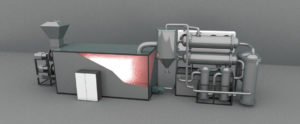
 The complexes for thermal neutralization of solid, liquid (including viscoplastic) and gaseous wastes were presented by ZAO Tekhnohim Engineering Center (St. Petersburg) at a meeting of the Scientific and Technical Council of OAO Tatneftekhiminvest-Holding (Kazan). It was about the methods of incineration (burning) and thermal oxidation that are in line with world standards, through which it is proposed to destroy waste, render it harmless or, if not possible, dispose of it, transfer it to a lower hazard class in compliance with environmental standards.
Included were oil industry wastes: formation and drilling wastewater, carbohydrate-containing substandard water, tank bottom sediments, tank cleaning sludge, oil-contaminated soils, drill cuttings and mud, produced gas components, oil evaporation products and gas leaks.
Pyrolysis complexes for solid and liquid waste recycling that are relevant for small industries are proposed, as well as mobile complexes for the disposal of sludge and cremators of hazardous waste.
The main advantages are as follows.
The pyrolysis temperature of the primary chamber is 800 ° C, the temperature of the afterburning of volatile components in the secondary chamber is 1100 ÷ 1200 ° C with a residence time of volatile components in the reaction zone of more than 2 seconds. This allows you to completely destroy all toxic and dangerous components and prevent their re-formation. It is possible to adjust the time afterburning gases.
A flue gas cooling system is provided, the discharge temperature at the outlet to the atmosphere does not exceed 200 ° C. There is no smoke and odor.
There is the possibility of catalytic and non-catalytic purification of gases, allowing you to remove 99% of toxic and dangerous components.
The process is fully automated, only 1 operator is required.
Container or block execution of equipment allows you to quickly put it into operation.
How it works?
From the loading compartment with automatic locks and hydraulic pushers, the waste enters the primary chamber – the pyrolysis reactor. Here thermochemical conversion occurs in an oxygen-free environment.
This is followed by a secondary chamber of controlled afterburning, a gas cooling and filtration system, and a wet scrubber for collecting and neutralizing acids.
This technology was introduced in 60 countries, IA Devon learned at a meeting of the STC. In Tatarstan, the key partner of Tekhnokhim is Kazanorgsintez. In Rostov-on-Don, the option of combining purification and burning was implemented.