 HDPE – low pressure polyethylene: properties, features of production and production of material
HDPE has a general purpose and is characterized by a linear structure with minor offshoots from the main chain. The lack of volume limitations allows you to develop a material with high crystallinity, which can reach 80%. Due to this, high performance properties of this polymer are achieved. The compositional features of low-pressure polyethylene are a qualitative improvement in the modification of base polyethylene HDPE 276-73. For the formation of such polyethylene, certain conditions are required: temperature at the level of 120-150 ° C; pressure values below 0.1–2 MPa; the presence of Ziegler catalysts – Natta. Example: a mixture of TiCl4 and AlR3. The polymerization process takes place in suspension under the conditions of the ion-coordination mechanism. As a result, polyethylene is formed with an average molecular weight of 80–300 thousand.
Basic physical and chemical properties
Low-pressure polyethylene corresponds to the formula (-CH2-CH2-) n. It is chemically resistant to aggressive chemical elements and has excellent dielectric properties.
The granular form of low-pressure polyethylene is manufactured by polymerization. The density indicator for this process is more than 0.945 g / cm³. Granules are more crystalline and with a low degree of transparency. The melting point depends on the length of the polymer chains. High melting point in the manufacture of articles made of HDPE is very energy intensive. However, the performance characteristics of such products are excellent. They withstand fairly harsh conditions and relatively high temperatures without the formation of mechanical damage. The subjective shortcomings of HDPE products are surface haze, some roughness and insufficient creepiness. In addition, the low-pressure polyethylene film is easily wrinkled and rustles.
Industrial applications
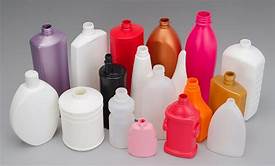
Features of HDPE, characterized by high strength, small elongation at break and high frost resistance, make its scope quite wide. In the household segment HDPE is used in the production of a variety of kitchen utensils and household items. In the construction of this material has found wide application in the manufacture of water pipes and various building materials. Most often used in the packaging industry during the production of packaging containers and bottles. Extrusion of the film allows you to get packages for packaging, packages “T-shirt” and packages with cutting handle. It is used in the development of a barrier layer for multilayer packaging materials, air bubble film and garbage bags.
The pipes produced in this way are used in gas supply systems, cold water supply systems and in order to protect electrical networks. They are used in drainage systems, external and internal sewage systems, as well as casing in wells. In addition, during the extrusion process, waterproofing sheets, parts of products for the engineering industry, membranes for waterproofing works, conveyor belts and geocells are produced. Blowing method get a variety of films and containers. With the help of injection molding, consumer goods, two-part and one-part covers, crates, furniture fittings and almost 400 auto component names are produced.
Recycling
Repeated processing of HDPE changes the viscosity properties at the level of 5–10%, and the strength characteristics are reduced by 10–20%. The use of recycled polyethylene does not significantly affect the strength and viscosity properties of HDPE. Viscosity properties can be easily adjusted by changing the temperature conditions during casting. At the moment, large sums of money are invested in improving the quality characteristics of HDPE. It is in this polyolefin that many modern manufacturers see the future.