 Polymers – high molecular weight organic compounds. Being relatives of proteins and amino acids, they have a long century.
Their half-life is beyond competition. When burned, macromolecular chains turn into phosgens, cyanides and dioxides, the resistance and harmfulness of which is comparable to heavy radiation. For decades, these substances, dissolved in air and water, contained in the flora and fauna, suppress the mechanisms of normal division of living cells of all organisms without exception. According to environmentalists, the forms of existence of synthetic materials, which are formed as a result of industrial reproduction of plastics, are less aggressive and more functional. Secondary monomers resulting from pyrolysis: ethylene, propylene, butadiene – are components of paints and adhesives. Other heavy plastic, having a high environmental purity, form the basis of sewage drains, water pipes, many other useful products.
The king of plastics is polypropylene
From the middle of the last century, when the method of polymerization of propylene was mastered, active production of the material began, which has found application in many industrial branches. The material had to be reliable, strong, resistant to the effects of an aggressive environment and of course environmentally friendly.
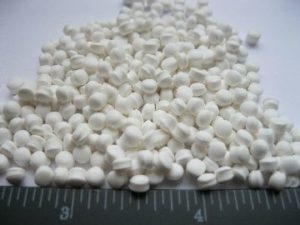
Polypropylene (PP) is a translucent crystalline substance obtained in the polymerization process, which is produced in powder or granular form. PP is considered one of the lightest thermoplastics. The material is non-toxic, does not sink in water, burns without smoke, melts in droplets, giving off an almost imperceptible odor.
Polypropylene production method
In industrial conditions, polypropylene is produced in the process of polymerization of propylene, a colorless combustible gas with an uncharacteristic odor. Polymerization of propylene occurs at a pressure of from 1 to 4 MPa. This difference depends on the solvent used. The reaction catalyst is the complex AiRg + TiCI3. Depending on the size of its particles, a different degree of crystallization of polypropylene is obtained.
Types of polypropylene
Polymerization conditions affect the structure of the arrangement of atoms in the macromolecule of the polymer obtained (the location of the methyl group atoms in the polymer chain). Due to this, polypropylene is divided into three types, different in their physicochemical properties:
Isotactic. Methyl groups are collected on one side of the polymer. This provides the material strength, durability, resistance to external influences. The softening temperature of the material is 140 ° С, melting is 165–170 ° С, and the density is 910 kg / m3.
Syndiotactic. Molecules of methyl groups are located from different sides. Such polymers have a high melting point. Atactic view. Here the positioning of the methyl components is random, chaotic. Therefore, polypropylene of this type has the following properties: rubber-like, sticky structure; melting point is 80 ° С, density – 850 kg / m3; high turnover; ability to dissolve in diethyl ether.
Polypropylene properties
Like any polymer, polypropylene has advantages and disadvantages that affect its operational capabilities. Given them, you can effectively apply this material in various areas.
Advantages:
The advantages of polypropylene are more related to polymers of the isotactic group. The melting point of 175 ° C indicates the resistance of the material to high temperatures. PP is impact resistant and allows multiple bends. In terms of wear resistance, low vapor and gas impermeability, polypropylene is comparable to polyamides. The non-polar structure of the material allows it to remain resistant to many
The non-polar structure of the material allows it to remain resistant to many aggressive chemicals: alcohol, acetone, certain types of acids, salts, alkalis, boiling water.
Disadvantages:
Strong oxidizers can destroy PP even at room temperature. Such substances include chromic mixture, sulfuric, nitric (concentrated), chlorosulfonic acid. The polymer is sensitive to light and oxygen. They cause the processes of decomposition of the material, expressed by loss of gloss, cracking, “coating” the surface. Special additives in the form of stabilizers for polymeric materials prevent such reactions.
Low frost resistance (the material becomes brittle at temperatures from -5 to -15 ° C) is removable if ethylene, butyl rubber or ethylene-propylene rubber is added to the macromolecule.
Polypropylene Applications
The greatest industrial interest is caused by the polypropylenes of the isotactic group. The percentage of polypropylene is as follows:
packaging – 33%;
transport – 12%;
furniture – 14%;
general goods – 10%;
construction – 6%;
electronics – 9%;
other needs – 16%.
Finished products made of polypropylene are produced in several ways:
The extrusion method is used in the production of packaging materials, stationery, pipes, films, threads, fibers, disposable tableware, food packaging.
Die casting will be used in the manufacture of packaging, medical products, household products, batteries, auto parts, plastic furniture, fittings, etc.). Filling packages, bottles for cosmetic goods, household chemicals, barrels, jerrycans, cisterns come out from under the blowing.
Large plastic products (children’s play complexes, outdoor toilet cubicles, septic tanks, garbage cans, road barriers) are produced by the method of roto-shaping. In the manufacture of insulating materials (polypropylene) used foaming method.