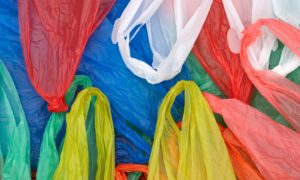
 South Korea has banned polymer bags in supermarkets and retail outlets, according to lenta.ru.
The restriction came into force on January 1, 2019 and affected 11 thousand supermarkets and two thousand outlets.
Now, instead of plastic bags, customers should be offered paper or cloth bags. Plastic packaging will be allowed only for meat and fish.
For violation of the law, the stores face a fine of three million won (about USD2.6 thousand). At the moment, a ban on free plastic bags is already in effect in South Korean stores; they can only be obtained for money.
It is noted that in the future restrictions will affect laundries and dry cleaners.
Earlier it was reported that in Moldova on January 1, 2019, an amendment to the law on domestic trade, prohibiting the use of disposable plastic bags in retail, entered into force. The first of the stores will disappear “thick-walled” packages – with a wall thickness of more than 50 microns. In a year, packages with a thickness of 15 microns will be withdrawn from circulation. They are considered the most harmful: their collection and processing is difficult because of the low weight of 7–8 grams.
In October 2018, the European Environment Committee voted to ban the use of disposable plastic products in the European Union in 2021, which accounted for more than 70% of marine litter.
In Georgia, in order to reduce environmental pollution, since October 1 of last year, the production, import and sale of oxo-degradable plastic bags less than 15 microns thick are prohibited.
In New Zealand, disposable plastic bags will also be banned from July 2019.
In early August 2018, banned the use of disposable plastic bags banned in Chile. Other countries that have banned the use of plastic bags are Zimbabwe, Australia, the United Kingdom and Kenya.