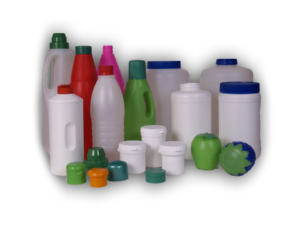
 STRONG AND WEAKNESSES OF THE TOUGH PLASTIC TARE
Pros:
• it is strong enough
• easy
• tough,
• ample opportunities for the manufacture of packaging design according to individual parameters,
• various possibilities of drawing an image, printing,
• suitable for food and non-food products,
• availability of materials for production,
• presentable appearance,
• the possibility of making different editions,
• possibility depending on the selected
composition of the material used in the temperature range from –30 to +40 ° C.
• easy to clean and wash without special
means.
Minuses:
• does not always have the right barrier
characteristics
• it is not always possible to create the necessary tightness,
• most of this packaging is made from exhaustible natural resources,
• high dependence of the product price on the cost of raw materials,
• low degree of recycling of this
packaging,
• for some consumers, it is still
associated with unnatural.
A LITTLE STATISTICS
According to Smithers Pira, world consumption of rigid polymer packaging in physical terms will grow by an average of 3.7% per year from 52.9 million tons in 2017 to 63.4 million tons in 2022 meters. According to the forecast, the cost of materials used for the production of rigid polymer packaging during this period will increase at a rate of 4.2% per year. The development of modern technologies for the manufacture of rigid polymer packaging can improve its barrier properties, which ensures the further penetration of rigid polymer packaging in such sectors as fruit juices, milk, wine, and semi-finished products. There is also a tendency to reduce the weight of the package. PET has the largest share of rigid polymer packaging, followed by PE.
and PP. The fastest growth rate is predicted for PP, which is now at the head of the injection molding market. Also, PP takes its share from PVC, PS and PSV in thermoforming. PET is projected to grow as well. above average rates, especially in developing regions. In addition to the non-alcoholic beverage market, the use of PET in the sectors of alcoholic beverages is increasing as bottles and cans for hot-filling products, trays for ready-made food and containers for non-food products. According to forecasts, by the end of 2017, polymer bottles and cans will have 60% world consumption of hard polymer packaging, on glasses and buckets – 15%, on trays and containers – 13%.
The largest market for hard plastic containers – food. According to analysts, it will account for 37% of the volume consumed in 2017. Smithers Pira specialists believe that biopolymer packaging, including PET bottles of 100% biological raw materials, will increase market share in the next five years.
TYPES OF HARD POLYMERIC TARE BY METHOD OF MANUFACTURE
Molded
During the casting process, the molten plastic in the machine’s screw moves under the action of a piston through the gating channels at high speed, filling the mold cavity. Cooling down, it forms a casting.
With the help of casting technology, preforms of plastic containers, plastic covers, and packaging of complex design are produced.
Blown
During the blowing process, the heated plastic is first shaped into a tube. Elastic plastic is placed inside the mold.
The mold squeezes the tube from the top and bottom, leaving only a small hole for pumping air inside. Under the influence of forced air, the elastic tubes begin to swell until they touch the surface of the mold. At the end of the air injection inside the tube acquires the exact outlines of the surface that sets a mold, such as a bottle. Water is fed into the internal channels of the mold, which allows the heated plastic to cool and harden. Then the mold is opened and remove excess pieces of the former tube. Depending on the chosen method of producing blanks, various methods of blow molding are distinguished.
The extrusion blow molding method is as follows: using an extruder, a billet is molded into a tube (sleeve). Then it enters the form in which the product is molded by creating an increased air pressure inside the billet.
Injection Molding involves the preparation of the method die casting. In this case, the melt
from the cylinder of the automatic molding machine it is injected into the casting mold, the tubular billet is formed in the gap between the walls of the mold and the internal core. The blank can be given the required shape, with the neck, handles, the necessary tides on the outer surface are made immediately during casting. After the process casting mold opens. Core together with hot workpiece moves to another
form, where after the closure of the half-molds, the process of inflation is carried out by supplying compressed air into the internal cavity. In this case, the size of the product increases, and the wall thickness decreases. Injection-blown method – a two-step process, which includes the manufacture of the preform (preform) method
The injection-blowing method is a two-step process, which includes the manufacture of a preform by injection molding with its subsequent blowing with compressed air in a softened state.
About preforms
PET preform is a polymer preform, from which a PET bottle is obtained by blowing for packaging food and non-food liquids. The most widely used variant of the technology is when the stages of casting the preform and its blowing are separated. The preform, called preform, is cast in a multi-cavity mold on an injection molding machine.
and completely cooled. Blowing blanks
is carried out by air on a special unit after its preliminary heating with subsequent cooling in the form. The separation of the stages of molding the blank and its blowing (as a rule, at the consumer) makes it possible to achieve high productivity with
making both blanks and finished products.
Thermoforming
Thermoforming is a process that consists in molding products not from a melt, but from polymer blanks (sheet, film) heated to a softened state. Method thermoforming combines several technological methods for processing sheet and film blanks: vacuum, pneumatic, mechanical, free-blown and combined. Forming occurs under the action of pressure drop created between the inner and outer surfaces of the sheet. When vacuum forming this differential is equal to the difference in pressure of the ambient air and residual pressure in the form, during pneumatic molding – the difference between the pressure of compressed air and atmospheric pressure, during stamping – pressure on the workpiece with the help of special mechanical elements of molding (punches). After making the preset a given configuration occurs its cooling which leads to fixation geometric shape of the product.
Extrusion
Extrusion is a technology for producing products by forcing a material melt through a forming hole. For the rigid packaging sector, extrusion often produces thick films, of which the container is molded. Also extrusion Plastic containers are resorted to in the event that it is necessary to manufacture a product with an indefinite length of a closed or open structure.
Pressing
Pressing is a production method. plastic products in molds, which consists in softening the material when heated and fixing the shape of the product as a result of exposure to pressure