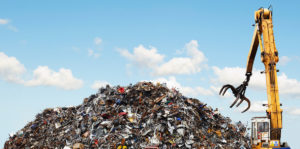
 We live in the era of plastic. In 2015, world industry produced 448 million tons of various plastics – twice as much as in 1998. To dismantle and utilize the mountains of plastic debris will now be able to only specialized robotic scavengers, writes Engadget.
According to the US Environmental Protection Agency, only 14% of plastic waste is recycled around the world. The World Bank estimates that mankind annually produces 1.3 billion tons of solid domestic waste, and this figure is expected to grow to 2 billion tons by the middle of the next decade. The lion’s share in these mountains of rubbish is plastic.
As noted in the study of the University of California, published in the journal Science Advances, out of 9.1 billion tons of plastic, which has become garbage since the beginning of the industrial boom, 7 billion tons is not utilized. Only about 9% of plastic was recycled, 12% burned, and the rest of the mass – about 5.5 billion tonnes – lies on landfills. Fortunately, experts on IT technologies began to pay attention to this problem. Now all the hope for automation of the solution of the problem of plastic debris.
For example, the company AMP Robotics, took the “ancient” (20-year-old) mechanized line for sorting garbage, gave her robotic “eyes”, a processor with an algorithm of artificial intelligence and, of course, a human name – “Clark”. A year ago, “Clark” took up his titanic work. Computer vision is looking for a cardboard package from milk, juices and other food products on a conveyor belt. “Clark” snatches packets and boxes from the garbage stream with a robotic “hand” and two suckers. The robot works at a speed of 60 subjects per minute, 20 more than a garbage-sorting man. The algorithm operates with 90 percent accuracy. According to the company’s representatives, this leads to a reduction in costs by 50%. The main thing is that “Clark” learns in the course of work, so in the future he will be able to sort waste of any type.
Australian researchers are creating a solar-powered 3D printer that uses raw materials from plastic as raw materials and prints pipes and other plumbing materials from it. According to the scientists, the invention will help solve the problems with water supply in developing countries.
Https://hightech.fm