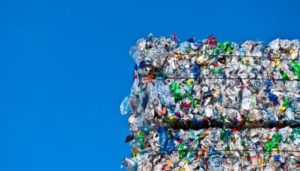
 The “ideal storm” continues to gain momentum in the world, approaching the petrochemical industry. The main role in this is played by the growing attention of consumers to the ecology and waste of plastics, changing business models of production and trends of digitalization. What consequences this will have for petrochemistry is described in a study conducted by Globuc on the eve of the conference “Petrochemistry of Russia and the CIS”.
OIL PRODUCERS CAN HAVE GONE CHEMICALS
The industry is entering a new era and evidence of this, for example, the ban on disposable plastic and plans for a complete recycling of all plastic by 2030 in the EU.
The transition to the so-called “closed-cycle economy” and the related structural changes in the demand for plastics are one of the main challenges for the industry, says Anton TVELENYV, Director for World Markets, Head of Polymers, WorleyParsons.
The main question today is linked to reputational risks, as the topic of environmental management in society is raised today, he says.
The increase in plastics recycling is not a negative factor, which will necessarily be reflected in a reduction in the growth in demand for plastics in general.
The development of new plastic grades continues to be one of the driving forces to ensure the profitability and development of petrochemical companies in the world, especially for manufacturers working in conditions of high prices for petrochemical raw materials.
However, it seems premature to state the transition from “volume to value increase” for the industry as a whole.
Both development strategies take place where the transition from “volume to value increase” is an expression of the impossibility or unwillingness to reach the production volumes that are required to ensure the corresponding competitive cost of the main “commodity” plastics.
Another trend: this is the growing interest of oil and gas companies to enter the petrochemical markets, says Tvelenyov.
This can be a major threat to modern petrochemical manufacturers. Extractive companies have more flexibility in pricing due to greater coverage of the commodity chain “from the field to the consumer of petrochemicals”, as well as relatively more experience and the possibility of implementing capital-intensive mega-projects.
HOW TO CREATE THE ECONOMY OF A CLOSED CYCLE
Recycling and market penetration of recycled polymeric materials are part of a broader trend towards sustainable development of the industry and moving towards a closed-cycle economy (ECP). It suggests a transition to a resource-efficient model aimed at introducing technological and social innovations, says Ksenia Karetin, head of SIBUR analytical center.
At the same time, the plastics themselves as a material are successfully incorporated into this model. They not only lead in specific environmental indicators (energy consumption and CO2 emissions in the production process), but also help save resources (energy efficiency and lower fuel consumption due to lighter weight). By extending the shelf life of products, waste is reduced.
The general EU approach in the framework of the new plastic strategy indicates that the main challenge, with which the entire industry will work, is effective disposal at the end of the product life cycle.
Many chemical companies reasonably see in this area economically attractive business opportunities and are willing to enter the recycling business.
As for the prohibitions, they affect a small part of the polymer products. We are mainly talking about quickly wrapped or so-called disposable plastics.
It is important to understand that for the inclusion in the world turnover of 81 million tons of recycled plastics, infrastructure is needed along with technological solutions (which are just to be created), and demand from end users of secondary plastics. It is with the problem of the predominance of supply over demand that the European Union has now encountered as part of the collection of voluntary commitments in the field of plastic, Karetina notes.
To achieve significant progress, it is necessary to introduce innovations at all stages of the chain: product design, product consumption patterns, collection, sorting and recycling of plastic waste.
Changes in legislation are also required, for example, improving the system of extended producer responsibility. The recognition of chemical processing, in addition to mechanical recycling, is also necessary. In general, the transition to an ESC is a multilevel mutually beneficial process, possible only with the cooperation of the state, business and society. Only by creating a holistic favorable legislative, tax and institutional environment, we can get a synergistic effect from this initiative, the expert concludes.
STIMULATING PROCESSING INSTEAD OF BANTS
The ban on disposable plastic in the EU will meet with serious obstacles in the implementation of the producers and processors of polymers, says advisor for strategy and oil refining and petrochemistry NIS (GAZPROM NEFT) Andrei VOROGUSHIN.
An example is the difficulty with the implementation of legislation on the content of biocomponents in motor fuels in the EU, although the negative economic consequences here are much less than when a ban on disposable packaging is introduced.
A much more realistic approach is to limit the demand for disposable packaging by introducing excise taxes on its production, increasing the price of disposable plastic bags in supermarkets, and increasing deposits for disposable containers. The latter stimulates its return to recycling.
Recycling of all plastic is also an impossible task. However, due to the growth of the deposit on disposable packaging, a significant increase in its collection for processing is possible. Moreover, most of the assembled plastic will not force out a new one from the production of similar products, but will occupy some other niches.
Bottle PET can be recycled into textile PET, Vorogushin says.
Polystyrene and styrene copolymers can be subjected to depolymerization to return the monomers. Polyolefins can be processed into less responsible (not under heavy loads) plastic products. Tires and some plastics can be processed into fuel components.