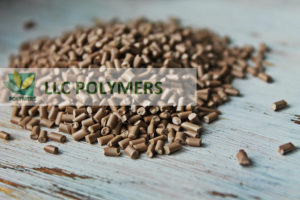
 Many manufacturers of polyethylene products sooner or later approach the issue of the use of recycled plastic. The instability of prices for primary raw materials makes it necessary to partially replace it in the formulation with regranulate, and sometimes switch to the secondary completely. The main question in this situation is, what are the fundamental differences between clean and recycled plastic? Whether the basic operational properties of a product will suffer? Let’s try to understand the issues of the quality of recycled PE.
Structure and structure of the polymer chain
Under this general term, you can combine several properties of macromolecules that determine the behavior of the material during processing and the performance characteristics of the final product.
Molecular mass. Polyethylene during extrusion and casting is heated to a state of melt. Primary PE is resistant to thermal destruction, since it is stabilized during the synthesis and there are no foreign impurities in it that initiate decomposition of the polymer. In pure HDPE, the molecular weight is approximately 80,000-800,000, in LDPE it is slightly lower than 80,000-500,000. The higher the molecular weight, the greater the strength, elongation and resistance to impact. In the case of secondary LDPE and HDPE, it inevitably decreases (it already averages 50,000–400,000). The reason is the breaking of the macromolecule chain, which makes them more fragile and less elastic;
Molecular mass distribution (MWD). The pure plastic MMP is quite narrow. In the composition of predominantly high molecular weight fractions. The narrow MWD makes the melt rheology (flow) stable. In secondary plastics, especially in LDPE, the molecular weight spread is much wider. The polymer moves in a non-uniform flow, since macromolecules of different weight move at different speeds. This behavior of the melt leads to marriage in the finished products (for example, the difference in thickness of the film and profile);
Melt viscosity. Polyethylene is characterized by an increase in melt viscosity (MFR) with multiple heating cycles. This behavior of the material is explained by the processes of cross-linking polymer chains. Especially the decrease in MFR is noticeable in the secondary LDPE, since it has a more chaotic and branched structure. The stitched material is worse recyclable, it is necessary to constantly adjust temperature regimes and shear loads.
Foreign matter
Depending on the type, all extraneous inclusions can be divided into:
The remains of catalysts. Even small traces of catalytic systems in polyethylene manifest themselves as initiators of thermal and photo-oxidation. Metal particles accumulate in the secondary plastics, respectively increasing the growth of foci of destruction processes. Remarkable is the fact that one brand of HDPE from different plants (developed on different catalysts) will behave differently during recycling. This fact significantly affects the quality of the secondary, because it is impossible to sort the products by the manufacturer of the polymer. Accordingly, thermal stability and light resistance will jump on the secondary polyethylene from batch to batch;
Impurities of paint, labels, food, petroleum products, etc. Pure polyethylene is a transparent and unpainted material. The remains of the media and products with which the products made of PE contacted paint the material yellow, brown, gray. Limiting thereby the use of regranulate in the manufacture of products where optical characteristics are important. In addition, contact with food is excluded, as residues of harmful chemicals can get into the food;
Impurities of extraneous plastics. Even with the re-melting of polyethylene waste, the ingress of polymers of a different nature causes a sharp drop in the strength characteristics. This may be important in the manufacture of secondary films, canisters and bottles. For thick-walled body products such impurities do not interfere.
Thermal stability and light resistance
Perhaps the most important difference in the behavior of primary and secondary polyethylene is the lower resistance of the latter to the action of the environment. Plastic waste, especially those constantly exploited in the sun, accumulate decomposition products – peroxides, acids, hydroperoxides and free radicals.
The dyes, flame retardants, fillers contained in the secondary material serve as initiators of the decomposition processes and activate thermal destruction during repeated heating cycles.
Secondary polyethylene should be exploited in the sun very limited. Because these same impurities accelerate decomposition in sunlight. Unlike the primary material, products from which can serve 2-3 seasons in the open air, secondary plastics will be able to stretch only 1 season.