Ученые из нескольких американских университетов подсчитали, сколько пластика произвело человечество за всю историю, какая его доля перерабатывается и какое количество пластика появится на планете в ближайшем будущем, если его потребление не сдерживать.
Пластик разлагается сотни лет, поэтому наносит огромный урон окружающей среде, накапливаясь в ней. Однако достоверных данных о масштабах бедствия не так много.
В новом исследовании специалисты подсчитали общее количество разных видов пластика, произведенное человечеством. За 50−60 лет с момента массового выпуска в середине прошлого века люди произвели около 8,3 миллиарда тонн, причем половина от этого количества произведена в последние 13 лет. Биоразлагаемых пластмасс же за все время произведено лишь четыре млн тонн, что в 2075 раз меньше. Авторы исследования исключили их из дальнейшего анализа.
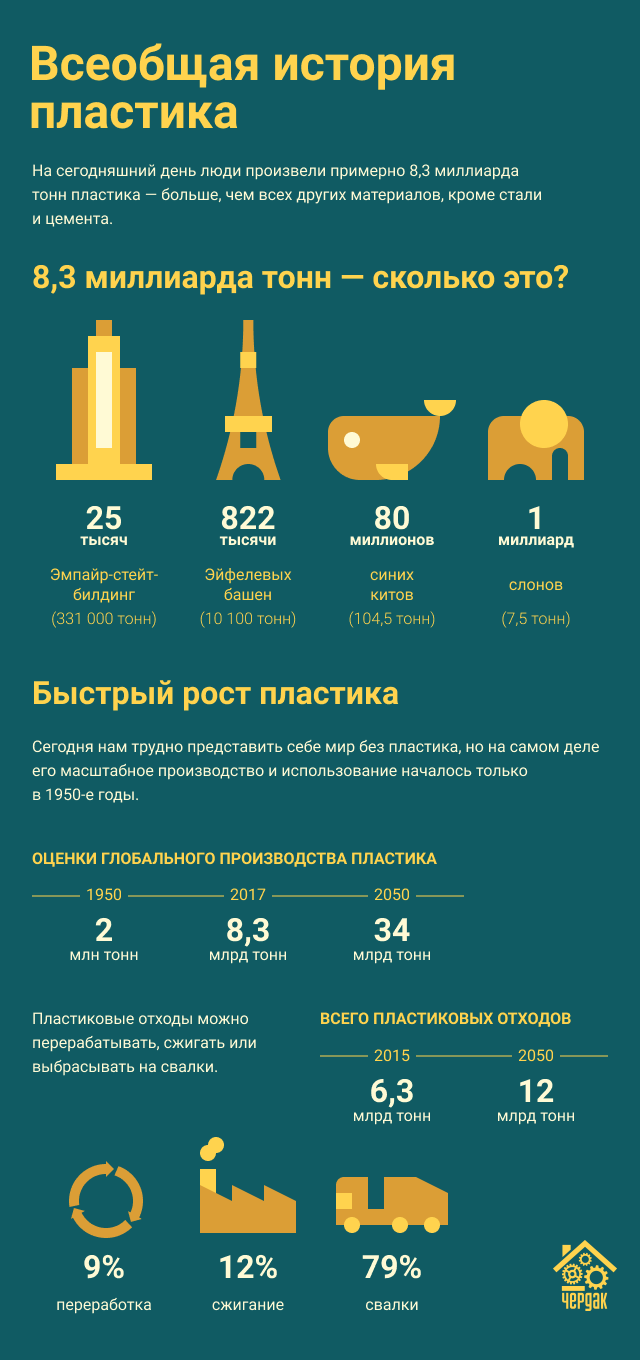
Пластиковых отходов по состоянию на 2015 год оказалось около 63 миллиардов тонн. Из них 79% находится на свалках или просто в природной среде, 12% — сожжено и лишь 9% переработано для повторного использования. В лидерах по переработке пластика — Европа и Китай: там повторно используется около 30 и 25% от пластиковых отходов соответственно.
В своем исследовании экологи использовали статистические данные о производстве, использовании и утилизации различных видов пластмасс. Речь идет о термопластах, реактопластах, полиуретане, эластомерах, герметиках и т.д. Особое внимание уделяется полиэтилену высокой и низкой плотности, полипропилену, полистиролу, поливинилхлориду, полиуретановым смолам и волокнам полиэстера, полиамида и акрила.
Ученые предупреждают: если текущие тенденции по выпуску пластика и управлению отходами сохранятся, то к 2050 году уже 12 миллиардов тонн окажется на свалках и в природной среде. Это примерно 35 000 — кратный вес здания Эмпайр Стейт Билдинг в Нью-Йорке. Столько же будет сожжено и лишь 9 миллиардов тонн — переработано.
Авторы работы заключают, что без хорошо продуманной стратегии по работе с пластиковыми отходами человечество, по сути, проводит неконтролируемый эксперимент в глобальном масштабе: миллиарды тонн пластика буду накапливаться во всех экосистемах планеты, приводя к непредсказуемым последствиям в дальней перспективе.
Статья с результатами исследования опубликована в журнале Science Advances.
«Чердак» неоднократно рассказывал о проблеме пластиковых отходов. Так, недавно выяснилось, что ими буквально завален один из самых удаленных от цивилизации островов — Хендерсон, а пластик из Северной Атлантики с океаническим течением попадает в Арктику, где уже, вероятно, накопились сотни тонн мусора.