 New waste law. What changes await the inhabitants of the Czech Republic
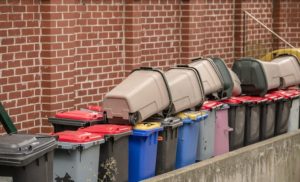
The Ministry of the Environment has prepared a waste law. One of the innovations is new garbage cans. It is assumed that black tanks should fill up most slowly and garbage should be removed less often than from the rest.
By 2030, the ministry plans to raise fees for landfill more than 3 times. Authorities believe that in this way motivate people to produce less waste and sort them. The amount of payment will depend on the amount of garbage. Recalculation of payment will be carried out once a month, taking into account the number of filled garbage bins, the amount of waste and its weight. In this regard, residents of the entrances of multi-storey buildings will only have to throw garbage in those containers that are secured by their entrance.
In addition, thanks to the new tracking system, the city hall will be able to calculate the unauthorized release of waste and remove it. Starting in 2025, textile sorting will be introduced.
Bedřich Moldan from Charles University and other specialists positively evaluate the law, noting that there was no normal waste law in their camp for 10 years.
In addition, another change is coming that is directly related to the waste law. By 2026, all countries within the EU are obliged to reduce the consumption of plastic utensils. The waste bill was sent by the ministry to the Legislative Council of the government.
Key provisions of the law
Textile Containers
From 2025, containers for textiles will appear on the streets. “As for the color of these containers, closer to the moment the provision comes into force, we will try to unify it,” said the representative of the Ministry of Environmental Protection, Petra Rubichkova.
Payment
Municipalities have to decide how the payment system will be set up. IvoKropachek, a waste specialist, notes that if you set a waste limit for people and require them to sort the garbage, then ultimately the municipalities will switch to payment by quantity. An additional motivation for municipalities will be the introduction of a sorting discount, that is, if the municipality does not go beyond the established limits for processing, then the burial fee will not increase.
More thorough sorting of biological waste
Separation of biological waste from the rest is given more attention. Containers of the appropriate color should be more accessible. Such tanks should also stand in enterprises where a lot of biological waste is generated – shops (fruits, vegetables), catering establishments.
Cameras near containers
A security camera should be installed near each waste collection point in order to eliminate attempts to unauthorized waste disposal.
Waste Reports
According to the law, municipalities are obliged to draw up annual reports, which will contain information on the amount of garbage removed per year and on the price of removal of various types of waste. The goal is to convey information to citizens so that everyone understands how much money he pays for the removal of his garbage.
Fighting the Black Landfills
The law gives mayors the authority to clean up black waste. At the moment, the problem is represented by the so-called Polish landfills. Initially, the municipality must invite the owner of the land to take out the garbage on its territory. If he refuses, then officials have the right to violate the boundaries of private property and clean themselves. At the same time, all costs are borne by the waste producer.
Future plans and goals
In order to increase the motivation of the inhabitants of the country, the law clearly spells out the goals and methods for their achievement, designed to lead to a decrease in the amount of mixed waste over time. 65% of municipal waste should be recycled by 2035. In the same year, only 1/10 of the waste should go to landfill. This is a difficult goal, given that today 47% of municipal waste is dumped. Since 2030, a ban on the disposal of waste in landfills will come into force.
Prohibition of the use of plastic utensils
This prohibition does not apply within the framework of this law, but it is spelled out in the European directive, which entered into force in June of this year, therefore it must also be respected by Czech citizens. This ban is due to the fact that plastic pollutes the beaches and the sea.
In 2021, EU countries are obligated to submit proposals on how to deal with this problem and reduce their use by 2026. It is also planned that in 2021 some varieties of disposable tableware will disappear from the market.