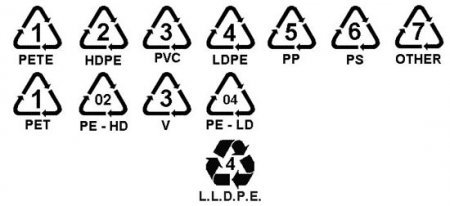
 In 1988, the Society of Plastic Industry developed a system of marking for all types of plastic, as well as identification codes, in order to assist in the disposal of disposable items. Plastic is marked by a symbol of three arrows in the form of a triangle, inside of which is a figure designating the type of plastic:
1 – PET or PETE – polyethylene terephthalate. Usually used as upholstery, blisters, packaging, including bottles with mineral water, soft drinks and fruit juices. This plastic is potentially dangerous for food use.
2 – PEHD or HDPE – high density polyethylene. It is considered safe for food use. Used in some bottles, jars.
3 – PVC or PVC – polyvinyl chloride. The material is potentially dangerous for food use, since it can contain cadmium, mercury, dioxins, bisphenol A. It is used for the production of garden furniture, pipes, pipes, window profiles, blinds, bottles, detergents, oilcloths, and flooring.
4 – LDPE and PEBD – low density polyethylene. It is considered safe for food use. Typically, it is used in the manufacture of garbage bags and flexible containers.
5 – PP – polypropylene. It is used in the automotive industry (bumpers, equipment), in the manufacture of toys, as well as in the food industry (packaging). It is considered safe for food use, but physicians do not recommend drinking from polypropylene dishes, since you can plant buds or even go blind due to the evolving phenol.
6 – PS – polystyrene. It is used in the manufacture of plates, insulation of buildings, food packages, cups and cutlery, CD boxes and other packages (foams and food film), dishes, toys, pens and so on. The material is potentially dangerous, especially in the case of high temperatures, because it contains styrene (its presence also stimulates the development of liver cirrhosis). When contact with alcohol, phenol / formaldehyde is released.
7 – OTHER or O – other. This group includes any other plastic that can not be included in the previous groups. Also, in terms of marking, pay attention to the badge with a fork and a glass, indicating the suitability of the material for contact with the products (if crossed out, then the plastic is accordingly unfit). It should be noted that all plastics are to some extent harmful for food use, even those that are originally intended for hot products.