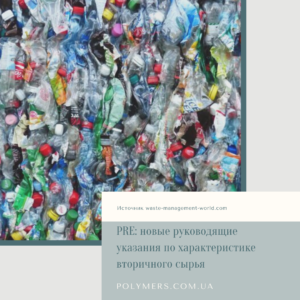
 To promote better plastics processing, the Plastics Recyclers Europe Trade Association has published its input specification guidelines based on the experience of European plastics processors.
The organization explained that the documents provide an information benchmark and a harmonized system for characterizing the contribution of processors, directing the European market towards efficient and sustainable management of plastic waste.
Based on recent market developments, existing guidelines (formerly known as bale characterization guidelines released in 2017 covering seven different threads) have been updated and additional ones have been created to cover the largest processing flows in Europe.
Guidelines are currently available for PE and PP films, PE-HD containers, rigid packaging PP, PS, rigid and flexible PVC, WEEE and ELV, as well as for transparent, translucent blue, blue and color PET waste.
In order to improve the quality of collected and sorted plastics, the characteristics of the waste coming to processing plants should be coordinated and radically improved throughout the EU.
The guidelines for the characterization of raw materials during processing indicate the main properties that determine the type, origin and characteristics of the sorted waste, levels of impurities, means of transportation and information about the supplier.
PRE added that documents can be used by both sorting centers and processing enterprises to verify the reliability of suppliers and, along with specifications agreed upon in the contract, to characterize the contents of the bales. In addition, they can serve as an information guide in the process of checking the quality of bales.
Sorting plastics by specific streams increases the efficiency of the recycling process and improves the quality of recyclables. To take this into account, PRE explained that guidelines were developed for each type of product to maximize the value of materials. In addition, the guidelines can be applied to various waste collection systems.
As the industry develops and individual companies move towards a circular economy, guidance documents will need to be adjusted to reflect individual needs and market changes. However, these recommendations are an additional step towards a harmonized and established market for secondary raw materials in Europe.
Coordinated actions and practices among participants in the value chain contribute to the establishment of reliable standards and best practices; therefore, the success of these guidelines depends on widespread dissemination by relevant players.
In addition, all users of the guidelines, as well as interested parties, are invited to provide feedback on them in order to improve them and adapt them to the needs of the industry.