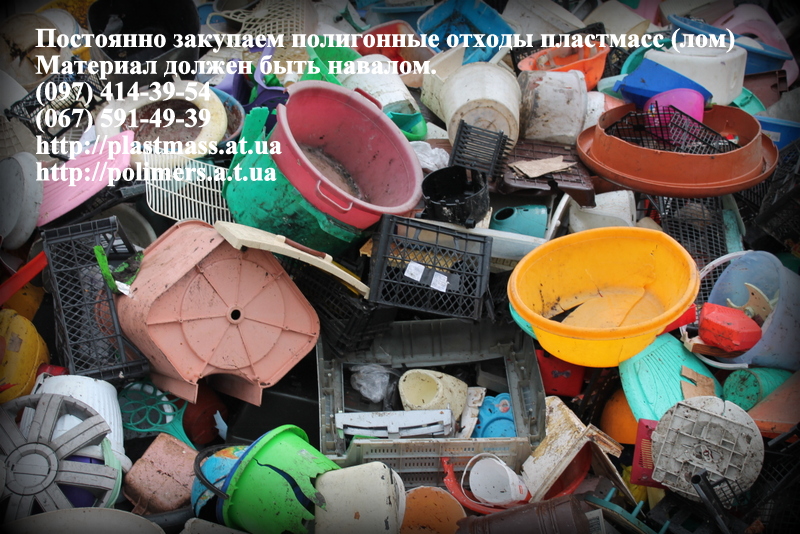
 The situation with solid domestic and industrial wastes in Ukraine can not be characterized as positive. According to the State Statistics Service, as of today the number of accumulated waste exceed 12 billion tons. According to unofficial – three times as much.
Only last year, as reported by the Ministry of Regional Development, was formed about 10 million. Tons, which are buried in the 6 th. Landfills with a total area of more than 9 thousand. Ha.
In addition, there are tens of thousands of dumps in the private sector, which reaches thousands of hectares of the area, who accurately measure virtually impossible. Thus, according to the Ministry of Regional Development annually each year revealed about 28 thousand. Unauthorized dumps.
According to environmentalists, the majority of landfills often work without any legal regulation, violating the existing norms and standards. As a result – a catastrophe in Gribovich, the largest landfill in Lviv region, which was already overcrowded and outdated. Recall that due to the displacement of debris several tons under the rubble proved a few people. The solution turned out to be a situation far too ineffective: transport garbage to Kyiv region, and to burn the plant “Energy”, which is already running at full capacity.
This example clearly shows that the problem of treatment of waste is solved before they occur. To this end, a national strategy for the treatment of waste and investments in processing plants should be developed.
Do recycle garbage in the laws of Ukraine?
Generally, in Ukraine, only 4% of household waste is processed at waste incineration plants that generate positive energy. This meager amount nationwide.
First, it does not build the infrastructure for separate collection, sorting and recycling of municipal solid waste. This significantly reduces the level of recycling and disposal, and thus increases the level of disposal (in 2014 buried in pologonah96,4% of municipal solid waste).
Secondly, but not the most important, – problems in the legislation related to the treatment of household waste. In general, in Ukraine there is no national strategy to address the problems of clogging.
However, it should be noted that work in this area began. Thus, the Ministry of Ecology and Natural Resources, in cooperation with the Ministry of Regional Development, Construction and Housing, the Ministry of Economic Development and Trade and representatives of the EBRD started working on the development of national waste management strategy, its preparation will be completed by the end of the year.
In addition, the regulatory – legal acts do not reflect the practical implementation of the separate collection and recycling, extended producer responsibility of packaging and the principle of “polluter pays”.
For example, the only factory in Rivne region waste management a year ago reopened after two years of inactivity and making certain legislative changes through the problems in the legislation approving tariffs for waste recycling. Statements should deal with the National Commission, carrying out state regulation in the areas of energy and utility services (NKREKP), but other law provides that the Commission approves tariffs only those companies whose activities are licensed. Recycling and disposal of household waste was not a licensed activity and found that the plant, in which investors have invested € 7 million, had no right to work.
At the same time, according to Minister of Ecology and Natural Resources Semerak, recycling should become a profitable business, and willing to invest in the processing of municipal solid waste in the Ukraine a lot.
Problems in the legislation and the charging operation of waste commented “Ukrekoalyans”, which states that the development of waste management prevents outdated approach to the tariff policy. Low tariffs for the export of solid waste for the population do not cover the full costs of companies – carriers, which makes it impossible to provide quality services. The tariff for waste disposal does not include a fee for the processing (use of waste as secondary materials or energy resources). Therefore, waste disposal in landfills is the most cost-effective for companies providing services. Fees for disposal of municipal solid waste should be raised several times at the state level with a clear definition of compensation carriers. Just then carriers will be profitable to place waste in landfills, and the company will be forced to introduce separate collection.
Now Verkhovna Rada registered about 20 bills for waste management. In particular, among them there are 4 of the bill, to introduce a new household waste management system (number 4838, 4835, 4836, 4837), and in the case of revision, this package can be maintained.
In addition, the Ministry of Ecology and Natural Resources said that today continues to develop a framework law on waste management, which should become the cornerstone of the reform of the system and lay the system of terminology and the basic principles of waste management in accordance with EU law.
At the same time, it is a difficult question, because there are lobbyists who defend the interests of companies that manufacture packaging and packaging. They have in the past year, the government decided to cancel for the import and production of any packaging (this fee was then sent to the company, should provide recycling). And a half years of the enterprise in the Ukraine, as multinational corporations and Ukrainian enterprises do not pay a penny for the formation of a significant amount of debris, because to a large extent of household waste consists of packaging, packaging waste and sent to a landfill. The producers do not bear any responsibility contrary to the European principle of extended producer responsibility.
How to solve the issue of treatment of household waste in Europe?
In the EU, utilization of materials for one person is 16 tons, of which 6 have become waste. Each of the 500 million EU citizens in the framework of the household waste generated on average half a tonne of household waste per year. In the EU as a whole produces about 3 billion tonnes of waste a year -. 40% of this is recycled or comes to recycling.
At the same time, the scope of solid waste management and processing industry in the EU has a turnover of € 137 billion. That is a little over 1.1% of GDP. Together, these spheres create 2 million jobs. And if the EU Member States will process 70% of the waste, it will create another 500 thousand new jobs in the EU.
In general, the EU’s approach to waste management is based around 30 years ago. It is based on a number of concrete plans and legislative directive (Waste Framework Directive), which is the basis of EU policies on waste, to reduce the negative consequences for the health of citizens and the environment, as well as the construction of an energy and resource efficient economy.
The Directive requires EU Member States to recycle 50% of municipal waste and 70% of construction waste to 2020go year. Portion of what goes to landfill should be reduced to 30%, and incineration – up to 20% across the EU. By 2050, the processing must go up to 100% of the waste. Currently, about 40% is sent to landfill, 40% is recycled or composted, while the rest is burned.
Leaders of processing are Germany, the Netherlands and Austria, where about 70% of processed waste. Sweden, Denmark, Belgium and Luxembourg have slightly lower performance.
It is also an important role in the process of waste management plays “7th Environmental Action Programme of the environment”, to guide the policies in this area until 2020 and sets the strategic orientations to 2050-year.
Hence due to the formulation of long-term objectives and, accordingly, the effectiveness of EU enforcement action, the proportion of waste is recycled in the EU is increasing, and that goes to the landfill, – decreases. The negative impact of landfills on the environment is minimized, more energy is produced by burning waste and hazardous waste with illegal dumps controlled tougher.
However, each EU country has its own program of preventive treatment of waste.
“National Industrial Symbiosis Programme” (United Kingdom)
This program has created a market that drives those who produce waste, and those who can use them and ready for them to pay as much as possible. For example, waste conversion from pasture to electricity, fatty acid bio-diesel, etc. .. It is estimated that the program adds to the economy of the United Kingdom an additional € 3 billion.
«Eco-Point Initiative” (Italy)
Dry food products sold in supermarkets with distribution devices, thus avoiding packaging and buy as much as you need customers. This is not only good for them, but also saves money for container from 10 to 70%. It is estimated that 30 “eco-points” in Italy and Switzerland are warning use about 1 million packages annually. As you know, the initiative is applied in Ukraine in hypermarkets and simple markets.
“Vienna Waste Prevention Programme” (Austria)
Focus program to spend budget money on “green” products and services, helping small businesses become more eco-efficient, promote the idea of re-use and repair products. The result is that customers can buy the goods that have been in use, popredzhayuchi education about 1 thousand tons of waste annually. About 400 tons of goods are repaired annually in local service centers and eco-effective tips have helped to save businesses € 34 million in 1998 and to prevent the occurrence of more than 100 thousand tons of waste.
PS Coming back to Ukraine, it is worth noting that the delay in deciding on the treatment of household waste will inevitably lead to a large-scale disaster and the terrible consequences for the environment and human health. If we do not take action today on the construction of waste sorting lines, waste treatment plants, use of waste as secondary resources, then turn Ukraine into a complete dump.
Of course, the beginning of work on the national waste management strategy – this is a breakthrough, because Ukraine is nothing such had no, but will need to make even greater efforts to not only finish, but also to bring to life.