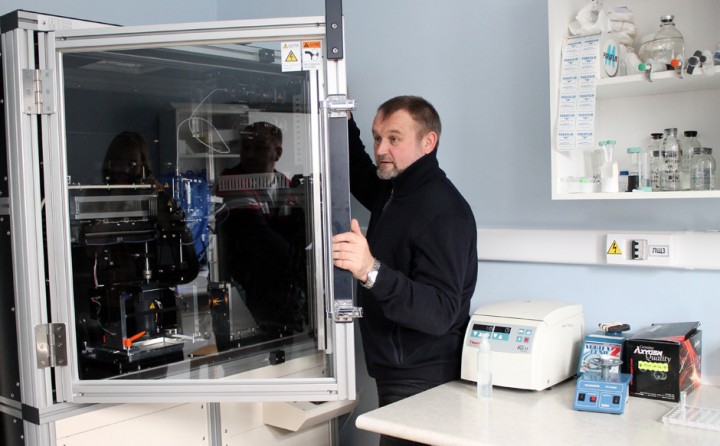
 At the Institute of Catalysis. GKBoreskov SB RAS developed technology for producing ultra-high molecular polyethylene having a wide range of applications in extreme conditions of the Arctic.
“According to modern requirements, the polymeric materials for the region must be operated at the calculated temperatures below minus 70-75 degrees. In this regard, of particular interest are products based on polyethylene, especially sverhmolekulyarnogo “, – says head of the group of organometallic compounds synthesis of catalytic processes, the Institute, Doctor of Chemistry Nikolai Y. Adonin.
When the molecular weight of the polyethylene over one million, he develops unique properties: high impact resistance, resistance to frost, aggressive environments, abrasion resistance, low friction coefficient. The filaments of UHMW polyethylene have a unique mass-dimensional characteristics. Their products are lighter than water and is almost 1, 5 times lighter products made of aramid fibers.
Nikolai Adonin
Against the background of all products made of polyethylene, the volume of which is about 100 million tons per year, world production of ultra-high molecular material has only 300 thousand tons (ie – 0.3%), and of these, only about 17 thousand tons of processed into yarn. This is due to the complexity of technology and by factors such as resource and energy consumption. The starting powder is dissolved in boiling organic solvents and a gel is obtained, wherein the content of a substance required for formation of filaments does not exceed 2.5%. This, and the subsequent drying step, and “pull” technology makes it extremely energy-intensive and leads to its high cost.
Siberian researchers have figured out how to create the material melt process, excluding the above-described stage. This was achieved thanks to the transition to a new catalyst developed at the BIC. The resulting powder has a fundamentally new properties. It opens the way of processing, reducing the cost of the finished product.
Possible applications of the material: health products, various textile products (eg, tents), geogrids to reinforce runways in the Arctic and more.
Science in Siberia