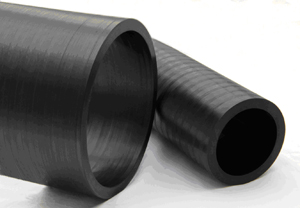
 Despite the fact that all of the polymer tube defined by common technical and operational characteristics, in certain types of pipes (PP, PE, PVC, pacemakers etc.) also have their own characteristics. We single out the distinctive features of PE pipes.
Durability
PE pipes, as well as other polymer pipes are guaranteed lifetime of at least 50 years.
Temperature
PE retains performance characteristics at low temperatures (down to -70 ° C) and relatively high strength (up to +60 ° C). This makes it possible to operate these tubes and hold them lining even in winter conditions. At higher temperatures the strength of PE falls, and he is not able to withstand high pressure.
Improved properties of polyethylene pipes with time.
Increasing the capacity of polyethylene pipes increases with time for two reasons:
The inner diameter of the metal pipe decreases with time due korroziyonogo overgrowth. The diameter of the polyethylene tube is increased during operation without loss of efficiency due to the characteristic of creep phenomenon polyethylene. This increase is about 1.5% in the first 10 years and about 3% for the entire life of the pipeline.
The inner surface of the polyethylene pipe eventually becomes softer and smoother due to the swelling of the polymer and the interfacial layer surface elasticity voznikonoveniya specific effect which improves the flow conditions of the pipe wall and reduces the resistance to movement.
Elasticity.
PE pipes are flexible enough. Due to this property of PE pipes with diameter up to 160 mm can be supplied to consumers in the long coils 100, 200 meters and more. PE pipes can be cut with a hacksaw. Networks of this type of pipe are assembled by hand with special fittings, couplings and other auxiliary material.
PE is aging under the influence of direct sunlight, so when using PE pipes in outdoor networks of the original PE stabilize, filling the polymer with soot.
Technical properties of polyethylene pipes, depending on the area of application shall be governed by the following guests:
· GOST 18599-2001. Polyethylene pressure pipes.
· GOST 22689.0-89. Sewer polyethylene pipes and shaped parts to them.
· GOST 50838-95. Plastic pipes for natural gas pipelines.
GOST 18599-2001 apply to pressure pipes made of polyethylene intended for pipelines transporting water, including potable water, at temperatures from 0 to 40 ‘C, as well as other liquid and gaseous substances. This Standard does not apply to pipes for electrical installation works and transportation of combustible gases, intended as raw material and fuel for industrial and household use. Dimensions of polyethylene pipes depending on the maximum operating pressure for PE-32, PE-63, PE-80 and PE-100 are presented, respectively, in Annex 1, Annex 2, Annex 3 and Annex 4.
Symbol pipes consists of the word “pipe”, acronym materials (PE 32, PE 63, PE 80, PE 100), the standard dimension ratio (the SDK), the dash, the nominal outer diameter, nominal wall thickness, pipe destination: housekeeping, potable denoted by the word “drinking”, in other cases – “technical” and refer to this standard. Examples of symbols:
PE pipes PE 32, SDR 21, nominal outside diameter of 32 mm and a nominal wall thickness of 2.0 mm, for systems of domestic and drinking purposes: PE pipes SDR 32 21 -32h2 drinking GOST 18599-2001
· Polyethylene pipes PE 80, SDR 17, nominal outside diameter of 160 mm and a nominal wall thickness of 9.1 mm, used for domestic and drinking purposes: PE pipes SDR 80 17 – 160 x 9.1 technical GOST 18599-2001
The pipes are made of polyethylene minimum long-term strength MRS 3,2; 6.3; 8.0; 10.0 MPa (PE 32, PE 63, PE 80, PE 100).
GOST 22689.0-89 applies to pipes and shaped parts to them (hereinafter – products) made of polyethylene low (HDPE) and high (HDPE) pressure, intended for internal sewerage systems in buildings with a maximum temperature of the liquid waste 60 ° C and short-term (up to 1 min) 95 ° C.
Melt flow rate is determined by the material of finished products, should not exceed 2 g / 10 min. The surface of the pipes and fittings must be flat and smooth. On the outer surface of the articles are allowed traces of sizing and shaping tools of not more than 0.5 mm. Coagulation tubes in the bay is not allowed. Deviations from straightness of the pipes are not regulated.
Changing the size of the pipes in the longitudinal direction after warming must not exceed 3%. Pipes and fittings must not crack under heating for 24 hours in a 20% solution of substance OP-10 GOST 8433 at a temperature (80 ± 3) ° C. Pipe connections and fittings must be tight when tested by internal hydrostatic pressure of 0.1 MPa (1 kg / cm2 at ambient temperature (15 ± 10) ° C. Pipes and fittings should be to produce HDPE with a melt flow index, determined according to GOST 16338, and LDPE with a melt flow index, determined according to GOST 16337, in the range 0.25-1.5 g / 10 min, containing 1.5-2.5% carbon and ensure the quality of performance in accordance with the requirements of this standard, specifically:
of granulated polyethylene of low pressure according to GOST 16338 marks 203-12, 203-20, 204-12, 204-20, 206-20, 273-79 and 273-80 of higher and first grades;
granular high density polyethylene grades according to GOST 16337 102-10, 102-12, 102-14, 106-10, 106-12, 106-14, 153-10, 153-12, 153-14, 176-10, 176 176-14 -12 and the higher and first grades.
Sewer pipes should produce straight lines of length 2; 3; 5.5; 6 and 8 m. By agreement between the manufacturer and the customer is possible to produce pipes of different length.
GOST 50838-95 on plastic pipe natural gas pipelines requires their manufacturer in straight lengths, coils and coils and pipes with a diameter of 200 mm and 225 produced only in straight lengths. The length of the pipes in straight lengths should be from 5 to 24 m with a multiplicity of 0.5 m, maximum deviation from the nominal length – no more than 1%. Allowed the party pipes in lengths up to 5% of the pipe length of less than 5 m, but not less than 3 m.
Maximum deviation length of pipe, manufactured in coils and coils, no more than 3% for pipes less than 500 m in length and not more than 1.5% for a pipe length of 500 m or more. Allowed by agreement with the consumer manufacturing of pipe lengths and tolerances. The pipes are made of polyethylene minimum long-term strength MRS 6.3 MPa (PE 63), MRS 8,0 MPa (PE 80) and MRS 10,0 MPa (PE 100) in accordance with the technical documentation, approved in the established order.
Using recycled polyethylene is not allowed.