While in Russia the separate collection of garbage is only gaining momentum, in the US it has become everyday. However, this does not mean that the problem of garbage has been solved – now that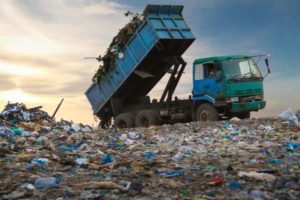 other countries have stopped picking up American paper and plastic, the waste will go to the common trash can. Alan Samuels, a journalist with The Atlantic, talks about the challenges that recycling has faced in one of the largest economies in the world.
After decades of extensive information campaigns, Americans finally began to recycle garbage. At airports, shopping centers, schools and office buildings throughout the country there are containers for plastic bottles, aluminum cans and newspapers. In some cities, you may be fined if inspectors find that you have not properly processed materials.
However, now most of these carefully sorted recycled waste falls into the common waste basket.
For decades, we shipped the bulk of our processing to China — tons were shipped on ships for the manufacture of goods such as shoes, bags, and new plastic products.
But last year, the country restricted imports to some types of recycled materials, including mixed paper — magazines, office paper, waste mail — and most plastics.
Across the country, waste management companies explain to cities and counties that there is no longer a market for recycling their waste. Now municipalities have two options: pay a much higher rate to get rid of recycling, or just throw out the garbage.
Most choose the latter.
“We are doing everything we can to remain attentive to the environment, but we can’t afford it anymore,” said Judy Milner, chairman of the city administration of Franklin, New Hampshire.
Since 2010, the city introduced recycling and encouraged residents to throw paper, metal and plastic into special green containers. When the program was launched, the city could do without additional processing costs, selling a ton for $ 6. Now, according to Judy Milner, the transfer station charges the city $ 125 for each recycled ton and $ 68 for burning one ton.
One fifth of Franklin residents live below the poverty line, and the city administration would not want to ask them to pay more for recycling, so all carefully sorted bottles and cans are simply burned.
Judy Milner does not like the fact that the city is responsible for toxins released into the environment, but she can do little. “Plastic is not the thing for which we have a market,” she said.
The same thing happens all over the country. In Broadway, Va., The recycling program has worked for 22 years. It was recently suspended after the Waste Management Department announced that prices in the city would increase by 63%, and then stopped providing the service of recycling and disposal of recyclable materials altogether.
“It feels like I’m breaking the law by throwing plastic bottles away,” city manager Kyle O’Brien told me.