 Helmut Tanner, founder and CEO of the Noris Plastic GmbH & Co., founded in 1969. KG is one of those engineers who started their career with practical training. At first, the specialization of Noris Plastic covered the production of pipes, sheets and profiles by extrusion, then the company began to develop its own machines. Today the company is run by his sons – Axel and Ralph Tanner. We believe that readers will be interested to learn about the professional development of Helmut Tanner, which reflects the entire era of the development of the plastics processing industry.
Mr. Tanner, this year you celebrate your 84th birthday and certainly appreciate your achievements in the plastics processing industry. How did you come into this industry?
Tanner: My professional career started with training for a toolmaker (today this specialty is called “industrial equipment mechanic”) at the Loewe Opta plant in my hometown of Kronach in Upper Franconia. I came there in February 1947. It was post-war time, so I could not help obeying the training company’s requirement to work two years on the restoration of the destroyed Loewe plant. My training ended in 1950.
To earn money for further studies, I stayed at Loewe Opta for another four years. After that, he went to study engineering engineer in Friedberg in the land of Hesse and successfully graduated in 1959.
Speaking about the years of life and study in Friedberg, I can not fail to mention the acquaintance with the world-famous singer Elvis Presley, who at that time in that city was serving in the tank division. We met in the nearby town of Bad Nauheim, where my colleagues and I taught Elvis Presley a card game and spent more than one evening together.
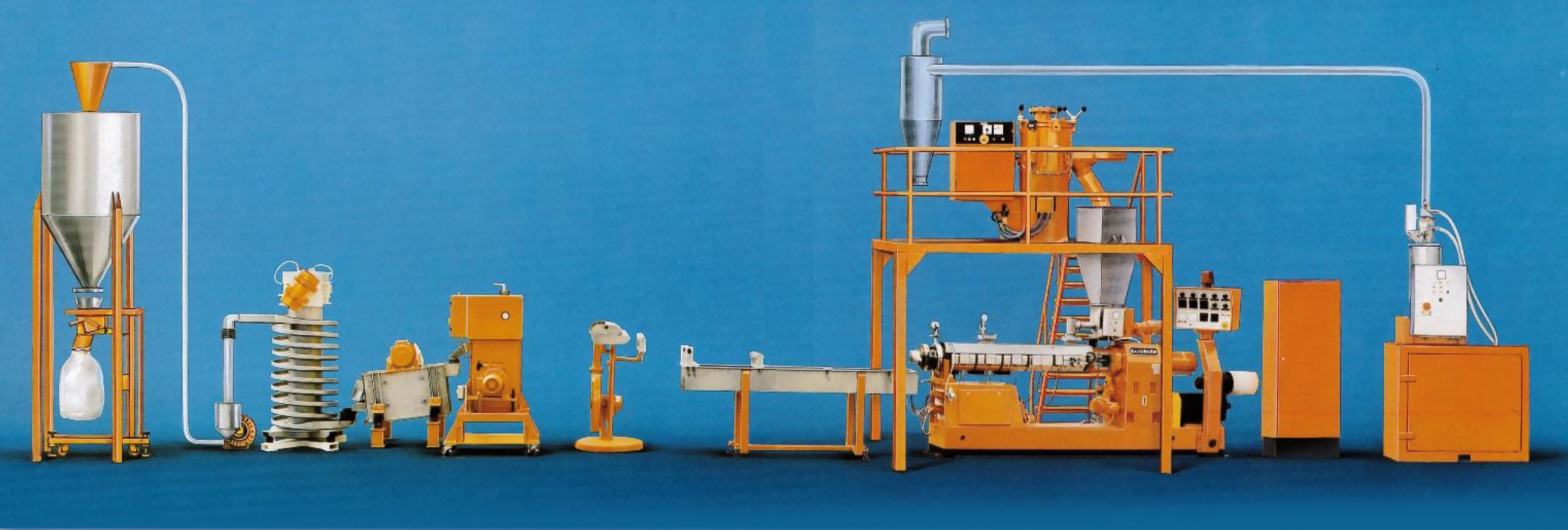
Fig. 1: Line for the production of masterbatch (source: Leistritz)
After graduation from the Loewe Opta factory, I worked as a consulting engineer at Mobil Oil Deutschland. In 1964, I moved to the Paul Leistritz engineering plant in Nuremberg, where the production of a new product category – extrusion technology – began. This means that I started from scratch from my activities in the development, production and marketing of single- and double-screw extruders.
At Leistritz, you got acquainted with the compounding – the technology, over which you worked almost all your life.
Tanner: At Leistritz, I started working in a new and difficult area for plastics processing. At the same time, I also touched the theme of masterbatch. We discovered it for ourselves when we were looking for suitable applications for Leistritz twin screw extruders. For the production of quality masterbatches, machines were needed to ensure an ideal dispersion with the highest quality of mixing. By this time, we had only knowledge of twin-screw extruders with multidirectional augers, since extruders with unidirectional rotating augers that are better suited for this task were protected by patents.
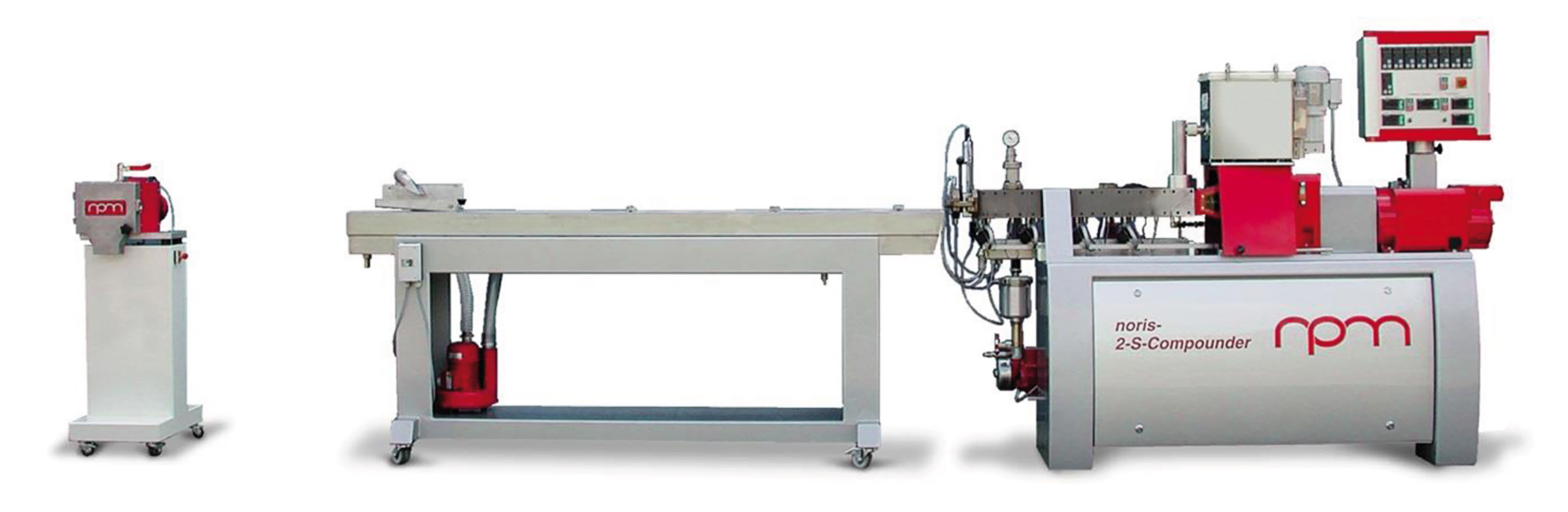
Fig. 2: Laboratory line of strand granulation (source: Noris Plastic)
Thanks to the special configuration of the augers and the development of mixing and homogenizing elements, we succeeded in successfully using a twin screw extruder with screws rotating in opposite directions. The complete production line consists of a mixer for premixing, an extruder with a dispenser, and a screen changing device for separating coarse particles present as impurities or brought in by the powder pigments used (Figure 1).
Behind the head of the granulator die follows a bath for cooling strands with a device for drying them, as well as a granulator, viboroshito and intermediate silo. Similar lines had a productivity of 30 to 300 kg / h.
In the absence of a finely divided filler for the polymer material, it is necessary to grind a part of the polymer material itself, for example 50%, to a grain size of about 50 μm by means of a fine grinding mill. In combination with a non-milled polymer material, this mixture can be successfully used as a starting material.

Fig. 3: Tape extractor (source: Noris Plastic)
Firstly masterbatches were made mainly with simple colors, such as black, white, green. However, the number of required colors grew rapidly. In the production of concentrates, the size of batches of which repeatedly decreased, production lines similar to those shown in Fig. 2. The advantage of such a machine is its versatility. The screw configuration, cylinder design and other parameters can be selected depending on the task. Another advantage of the equipment, in addition to small capital costs, is that the modular augers and cylinders allow the machine to be quickly reconfigured to new operating parameters or materials used. Therefore, even this laboratory twin-screw extruder or, as it is called, the compounder, has found extremely wide application.

Fig. 4: Laboratory Blow Molding Machine (Source: Noris Plastic)
In addition to the production of color masterbatch, similar lines can also prepare various masterbatch additives, for example, stabilizing or lubricating, anticorrosive and others. In the course of further improvement, such lines can be produced by any masterbatches.
Colorimetric tests are quite expensive, therefore, control using indicator strips is often used as an alternative. The last, extruded in a single screw extruder, or indicator film allows you to quickly and easily compare the resulting color quality with the desired color. A detail of such an installation is shown in Fig. 3. The installation consists of a single-screw extruder, a mold for strip extensions and a belt puller.
For masterbatches used in the production of films, a particularly high quality of dispersion is necessary. It can be checked using a laboratory blow molding machine for the film (Fig. 4).
The first machines designed for both quality control and masterbatch production were delivered in 1966-1967. customers in Germany, in particular, the Schleeberger company from Wuppertal and the manufacturer of Zvesda masterbatch in the former Yugoslavia. Subsequently, these and many other companies have become suppliers of high-quality masterbatch. The variety of colors increased, along with it, the quality of products steadily increased. To date, one of the largest consumers of masterbatch is the film sector, especially the release of films from LDPE, HDPE and polystyrene. This meant the need for a masterbatch of base polymer with these materials. Another interesting field of application was the cable industry with basic materials such as soft PVC and polyolefins.

Fig. 5.1: Screws rotating in opposite directions with engagement (from above) and unidirectional rotating augers (source: Leistritz AG)
Zvesda in the former Yugoslavia. Subsequently, these and many other companies have become suppliers of high-quality masterbatch. The variety of colors increased, along with it, the quality of products steadily increased. To date, one of the largest consumers of masterbatch is the film sector, especially the release of films from LDPE, HDPE and polystyrene. This meant the need for a masterbatch of base polymer with these materials. Another interesting field of application was the cable industry with basic materials such as soft PVC and polyolefins.
In the 70’s. masterbatches were almost never produced on extruders with screws rotating in opposite directions. For their production, extruders with unidirectional rotating augers were used. The principle of operation of both systems is shown in Fig. 5. A system with unidirectional rotating augers due to engagement of screws and high speed provides better cutting of the polymer material with the pigment. It is noteworthy that the development of this segment did not proceed with great leaps, but gradually, in an evolutionary way.
As a result of further improvement of the extrusion process, in particular, thanks to the use of special elements for augers with a very high cutting and dispersing action, the masterbatches became increasingly diverse in terms of color selection and qualitative in terms of pigment concentration.
We know that you have a rich experience of cooperation with various companies around the world, especially in Russia and countries of Eastern Europe. What can you say about them from personal experience?
Tanner: Over the years, the export situation has changed in the direction of increasing shipments of machines for the production of masterbatches. Here, three countries deserve special attention: the United States, Russia and Romania.
In the early 70’s. We opened an office of Leistritz in New Jersey (USA), which is still very successful in the market.
As for the former USSR, we delivered cars to Akademgorodok, located 20 km from the center of Novosibirsk. Another country in the former Eastern bloc, in which we supplied a large number of machines, was Romania. There they made painting masterbatches and masterbatches for processing, intended for various applications. Our partner in Romania was the wife of the president, Elena Ceausescu. She really wanted to popularize the processing of plastics in the plains of the country. In addition, it would be possible to create many new jobs
Looking to the future, we can say with great certainty that in the field of modification of the initial materials, that is, in the manufacture of masterbatch / compounding, there are still many interesting possibilities. These include, for example, the replacement of metal and wood with plastics and other similar applications.
Mr. Tenner, thank you for the interesting interview. We wish you all the best!