 Polypropylene for a long time and a long time in the industry took the place of one of the dominant materials. Due to its properties, it has a high demand and production growth dynamics ahead of many materials with similar characteristics. The world-wide polypropylene production index is expressed in 20%. This is the amount he has of the total industrial production of raw materials. The increase in production leads to the inevitable problem of disposing of used and substandard goods on the basis of polypropylene. With the increase of production volumes are growing waste materials on its basis. Waste polypropylene comprise the same 20% of all waste in the world.
Applications of recycled polypropylene
With awareness of the problems started actions to address it. More and more countries are actively connected to the introduction of over-polypropylene technologies. We obtain encouraging results: the production of goods from recycled polypropylene is steadily growing. This is the subject of interest of all the countries with a developed industry.
Building.
Secondary polypropylene serves as a basis for the production of housing elements of communication systems (water and sewer pipes, are actively introduced into operation and gas). Production of cranes PP pipes and connecting parts. It serves as the basis for the production of light elements of bearing designs of residential buildings and industrial facilities. From recycled polypropylene manufactured profiles, rails and fixing elements. Easy material ensures rapid construction of new buildings. Secondary polypropylene is used as the hydraulic and thermal insulation material in the form of finished articles (panels, plates, tapes, blocks), or as a semi-finished product (filling of the hollow base of structural elements of buildings).
Automotive industry
In the production of auto parts recycled polypropylene plays an important role. From it are made pipes (ventilation, cooling systems, and so on. D.), Seals (doors, hood and body), floor mats. Using recycled PP in the automotive industry has its own nuances. Its quality depends on the operating conditions of the primary product. A minimum of external influences on the material provides a secondary PP higher quality. Its characteristics are closer to the primary properties of polypropylene. For the production of the same car parts recycled polypropylene is used very rarely. In case of it is added to the primary and the resulting mixture was used. From this mixture to produce containers for battery lock, lights and housings of batteries, spoilers, etc.
Household goods and the agricultural sector
In the field of household production of goods from recycled polypropylene distributing more widely. The Company now mass production of containers of all types and sizes. It cans, boxes, boxes and garbage bags. Secondary polypropylene serves as a basis for the manufacture of furniture. This furniture production (tables and partitions in the laboratories and factories) and domestic (light tables, chairs, shelves, racks, etc.) Destination. Expanding production of objects of cultural and community purpose. From recycled polypropylene produced handles for tools (and the tools themselves entirely), dishes (85% of global production), the interior decorative elements, housings of electrical products, toys.
Medical and food industry
Physical properties of recycled polypropylene allow it to meet the highest requirements of sterility. Widespread have syringes and droppers from recycled PP. In the food industry, most plastic bottles, caps and plugs are made on the basis of secondary raw materials of polypropylene.
Raw materials to produce recycled polypropylene
The chemical composition of polypropylene allows it to recycle 95% of cases (exception: primary production contact with radioactive elements).
The main sources of raw materials:
Waste commodities. By this supply of raw material are all things made of polypropylene and their components. Decayed before processing the goods are sorted.
Wastes from the production of goods. In the manufacture of products in the production of PP accumulate waste (marriage remains of pieces, test specimens). In most cases, industrial power companies are not able to work in the recycling system. Unused PCB forwarded them to the places of their processing.
Waste of polypropylene. PP obtained by the polymerization of propylene. With its production of substandard accumulate residues (waste containers after the cleaning products with impaired production technology, test the casting mold). This material can be used and mainly producing a secondary raw material.
Methods of processing of polypropylene
Modern technologies allow to receive secondary PP in the following ways:
Extrusion. Secondary PP is produced by melting and then extruding the resulting mass in special forms.
Casting. Raw material PP based products placed in a mold for molding after plasticizing materials in granules. After placing the solidified material in the form of a predetermined size and shape.
Foaming. The principle of obtaining recycled PP in this way is based on placement in the raw material base of gaseous substances. Obtained upon solidification structure with a porous polymer.
Blowing (extrusion blow molding). The process involves obtaining a predetermined shape by blowing heated air. It is used for the production of bottles.
Rotational molding. The method consists in manufacturing premises by feedstock into a rotating mold while heating it.
Rotation occurs in two or more intersecting axes. The raw materials uniformly distributed within the mold and takes the shape of a hollow item. This method provides canisters, cans, etc.
The properties and characteristics of recycled polypropylene
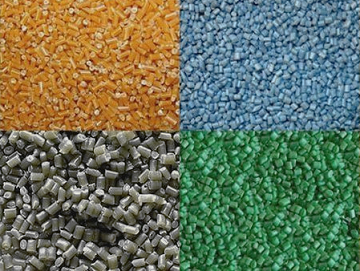
Waste materials are produced from a product in the form of granules. It should be noted that the product of secondary raw materials is cheaper than the primary. The granules may be either colorless or colored, depending on the feedstock. The granular PP secondary with characteristics similar to the primary.
There are the following advantages of it:
Resistance to mechanical stress. The material is able to withstand the shocks and has a high dynamic resistance.
Chemical resistance. The product is based on recycled PP is resistant to alkali and salt solutions, acids, an alcohol fluids.
Heat resistance. It has resistance to high temperatures.
Compatibility. The material is easily compatible with various products of natural and technological origin.
Gidrostoykost.
Low thermal conductivity.
Disadvantage: poor resistance to low temperatures.
Secondary polypropylene when it is processed with the help of modern technologies is a high quality product. It has a low cost of production, it is advantageous because of its cost effectiveness. Recycling PP – sample free production. With the growth of production of goods made of polypropylene will grow at a similar rate, and production of goods from the products of its recycling. Entrepreneurs it easy to buy.