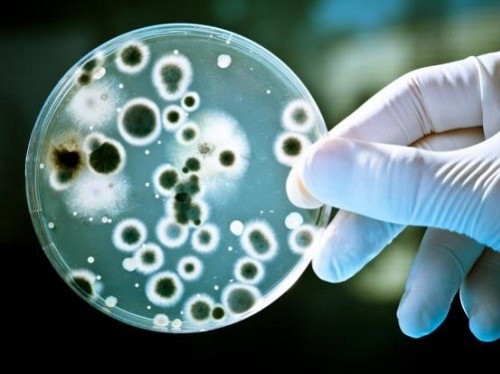
 Fight with microorganisms resistant to antibiotics is becoming increasingly difficult. Scientists are looking for new ways that can destroy such bacteria. The next attempt was made by researchers from the Engineering School of Melbourne (Melbourne School of Engineering, Australia).
They decided to destroy superbugs using peptide polymers – short proteins folded in a star-shaped structures. The number of superbugs, ie microorganisms that are resistant to most antibiotics used, continues to increase. Scientists estimate that by 2050, these microorganisms cause the death of 10 million people. New antibiotics also appear quite rarely – in the past thirty years have created only one or two such drug.
Professor Qiao Greg (Greg Qiao) and his colleagues have been working to develop antimicrobial proteins for several years. They showed that these proteins destroy Gram-negative bacteria, namely, they often develop resistance to antibiotics. Researchers have demonstrated that the proteins were not toxic, because they are effective not only authors demonstrated in cell models and animal.
One of the important features of the new antimicrobial is superbugs that did not develop signs of resistance to peptide polymers. This is due to the fact that these proteins act on bacteria in different ways, and not one that is characteristic of antibiotics.